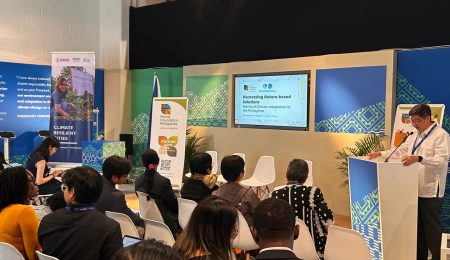

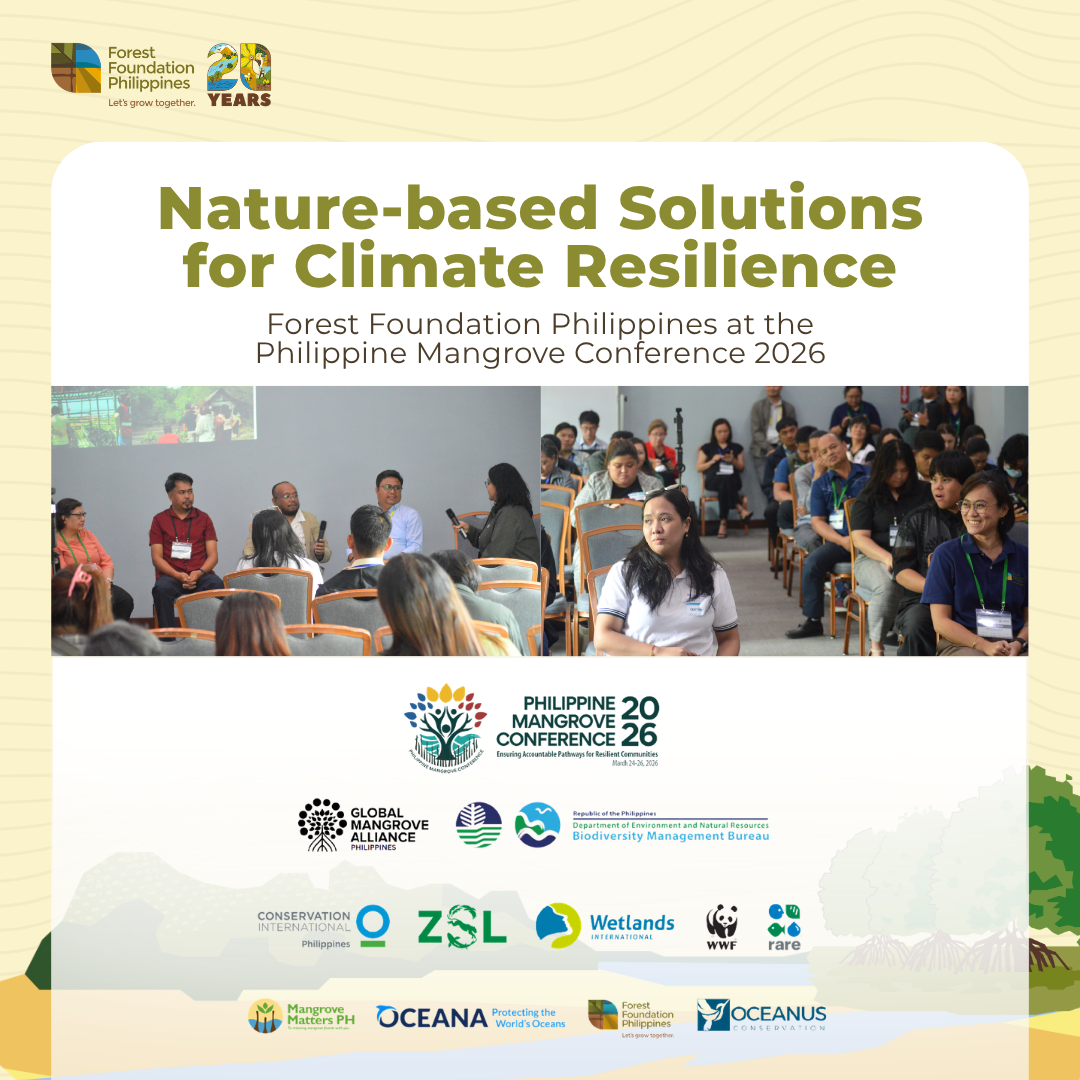
Nature-based Solutions (NbS) are increasingly recognized as an important pathway for strengthening climate resilience while protecting biodiversity and supporting communities. At the Philippine Mangrove Conference (PMC) 2026, Forest Foundation Philippines facilitated a session that explored how NbS can translate science, local knowledge, and community action into lasting solutions for climate-vulnerable areas.
The Philippine Mangrove Conference 2026 marked the country’s first national mangrove gathering in six years. Convened by the Global Mangrove Alliance Philippines (GMAP) and the Department of Environment and Natural Resources–Biodiversity Management Bureau (DENR-BMB), the conference brought together government agencies, scientists, local government units, communities, youth, and the private sector to take stock of progress in mangrove conservation and chart a path forward.
Putting People and Biodiversity at the Center
The Foundation moderated a panel discussion on NbS. It opened with what makes an intervention a Nature-based Solution. Using the IUCN definition, NbS are actions that address specific societal challenges through the protection, sustainable management, and restoration of ecosystems, while simultaneously providing benefits for people and biodiversity. This distinction is important as nature-based approaches continue to gain attention. Not every intervention that uses or is inspired by nature necessarily qualifies as an NbS. Effective NbS must be ecosystem-based, respond to a clearly identified societal challenge, and deliver benefits for both people and biodiversity.
The session also featured a panel discussion with practitioners working across coastal conservation, climate resilience, disaster risk reduction, and community-based Nature-based Solutions. Speakers included members from the NbS Support Network:
- Dr. Liza Lim, Director of the Institute for Social Order (ISO), grantee of the Foundation, who shared perspectives drawn from more than 30 years of experience in project development and management, monitoring and evaluation, training and education, and participatory research.
- Mr. Mark Jabines, Technical Officer for Communities for Resilience, also a grantee of the Foundation under the Philippines-Canada Partnership on Nature-based Solutions (NbS) for Climate Adaptation in Coron, Palawan, who shared his experience in environmental protection and coastal and marine resource management.
- Mr. Steven Emer Laranjo, Climate and Resilience Specialist and Program Lead of the Philippine Red Cross, who shared experiences in NbS, disaster risk reduction, anticipatory action, capacity development, and community resilience.
- Mr. Joeffrey Maglinte, NbS Lead of WWF-Philippines, who brought experience from NbS initiatives in Eastern Leyte, Northern Palawan, and the Siargao Islands.
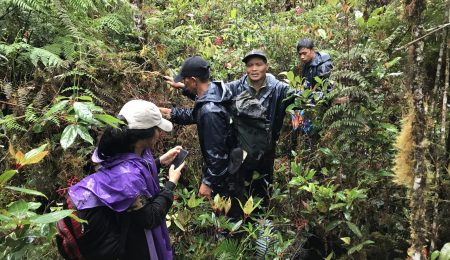
Together, the panelists offered grounded perspectives on what it takes to move NbS from concepts and assessments into practice. Their experiences underscored the importance of participatory approaches, cultural fit, hazard mapping, local knowledge, and integrating NbS into local development and disaster risk reduction and management plans.
From Mangroves to Seagrass: Community-led Solutions
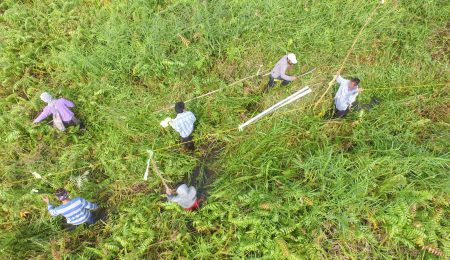
The community experiences during the Foundation’s panel discussion provided a practical look at how NbS can work in different local contexts. Forest Foundation included mangrove management and artificial oyster reefs in E.B. Magalona, Negros Occidental, as well as seagrass protection paired with sustainable sea cucumber farming in Balingasag, Misamis Oriental. These initiatives demonstrate that NbS can take different forms depending on the ecosystem, hazards, livelihoods, and priorities of the communities involved. Field experiences from civil society organizations, Non-governmental Organizations (NGOs), and the Philippine Red Cross further underscored the value of participatory approaches. Effective community-based NbS requires more than identifying an appropriate ecosystem intervention. It also means understanding local culture, mapping hazards with communities, and ensuring that solutions are integrated into local development and disaster risk reduction and management plans, and protect livelihoods, secure food, water, and build local resilience.
Beyond Projects: Making NbS Projects Last
The session also surfaced challenges that can prevent NbS from achieving long-term impact. One is the misalignment between infrastructure development and conservation objectives. Another is the continued reliance on project-based financing, which can make it difficult for communities and local institutions to sustain initiatives after a project ends. Participants also reflected on the need to look beyond purely monetary incentives when encouraging conservation. While livelihood opportunities and financial benefits can help support participation, lasting conservation ultimately depends on genuine community ownership and stewardship. These challenges point to a larger question: How can NbS move from individual projects toward approaches that are institutionalized within local planning, governance, and financing systems?
Three Lessons on NbS
Drawing from the session and experiences shared across the conference, three observations stood out. First, mangroves remain a leading NbS for climate-vulnerable coastal communities. Their role in reducing climate and disaster risks, supporting biodiversity, and sustaining livelihoods makes them particularly valuable in the Philippines. Second, NbS implementation must be grounded in science and assessment. Understanding vulnerability, biodiversity, hazards, gender, and local knowledge helps ensure that interventions respond to actual community and ecosystem needs. Third, science alone cannot deliver lasting NbS. The success of these interventions ultimately depends on people—their participation, knowledge, ownership, and commitment to stewarding ecosystems over time.
Continuing the Conversation
The Philippine Mangrove Conference 2026 closed with participants from across sectors developing concrete commitments toward 2028, to be revisited at the next national mangrove gathering. The conference’s closing theme, Padayon (or to continue) captured the work ahead: Sustaining momentum, translating roadmaps and commitments into institutional action, and strengthening the partnerships needed to protect and restore the country’s mangrove ecosystems.
About the PCP4NbS Program:
The Philippines-Canada Partnership on Nature-based Solutions (NbS) for Climate Adaptation (PCP4NbS), a program led by Forest Foundation Philippines and funded by the Government of Canada, seeks to contribute to strengthening climate resilience of communities, particularly rural and indigenous women, while ensuring co-benefits from, and for, natural resources and healthy ecosystems. Learn more here.