
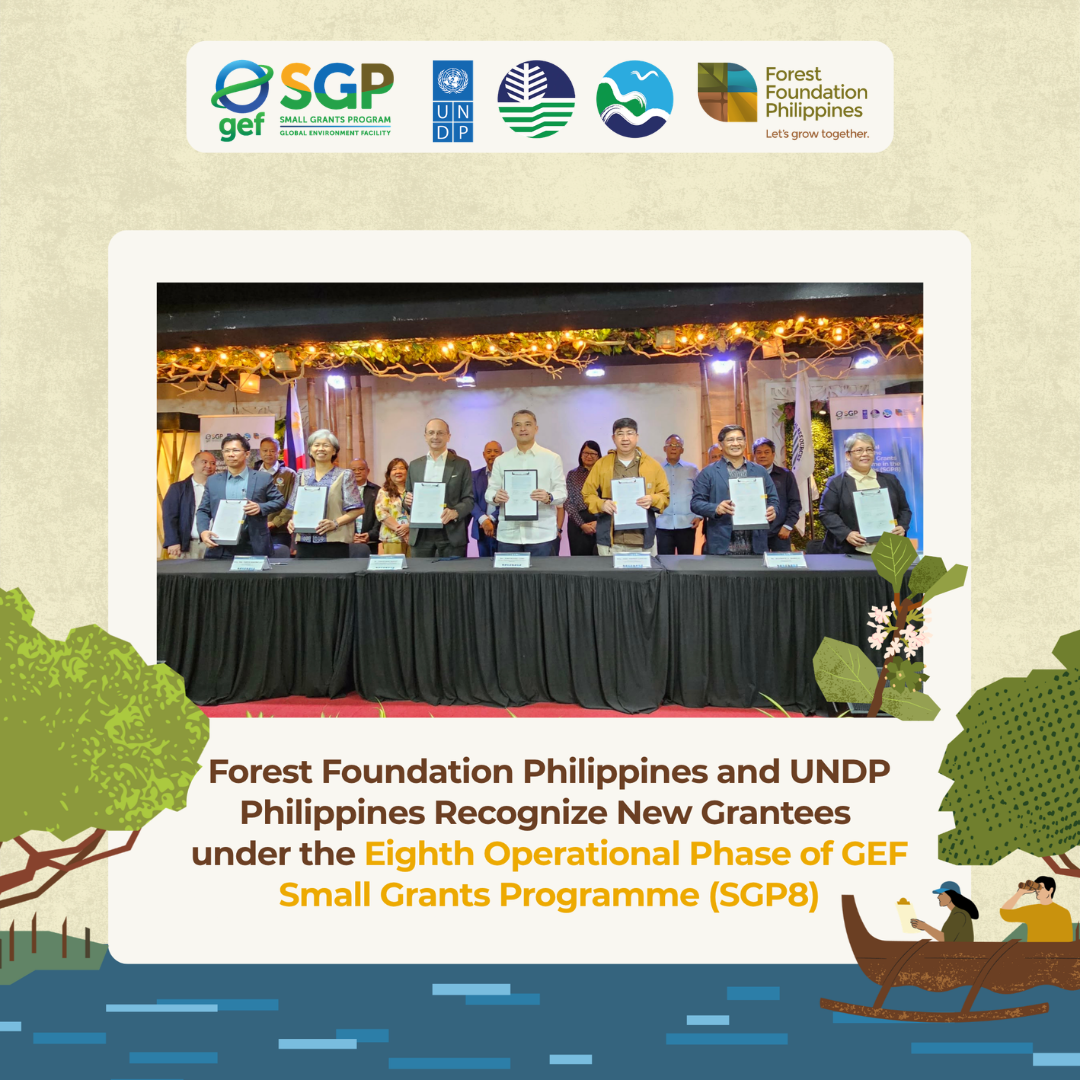
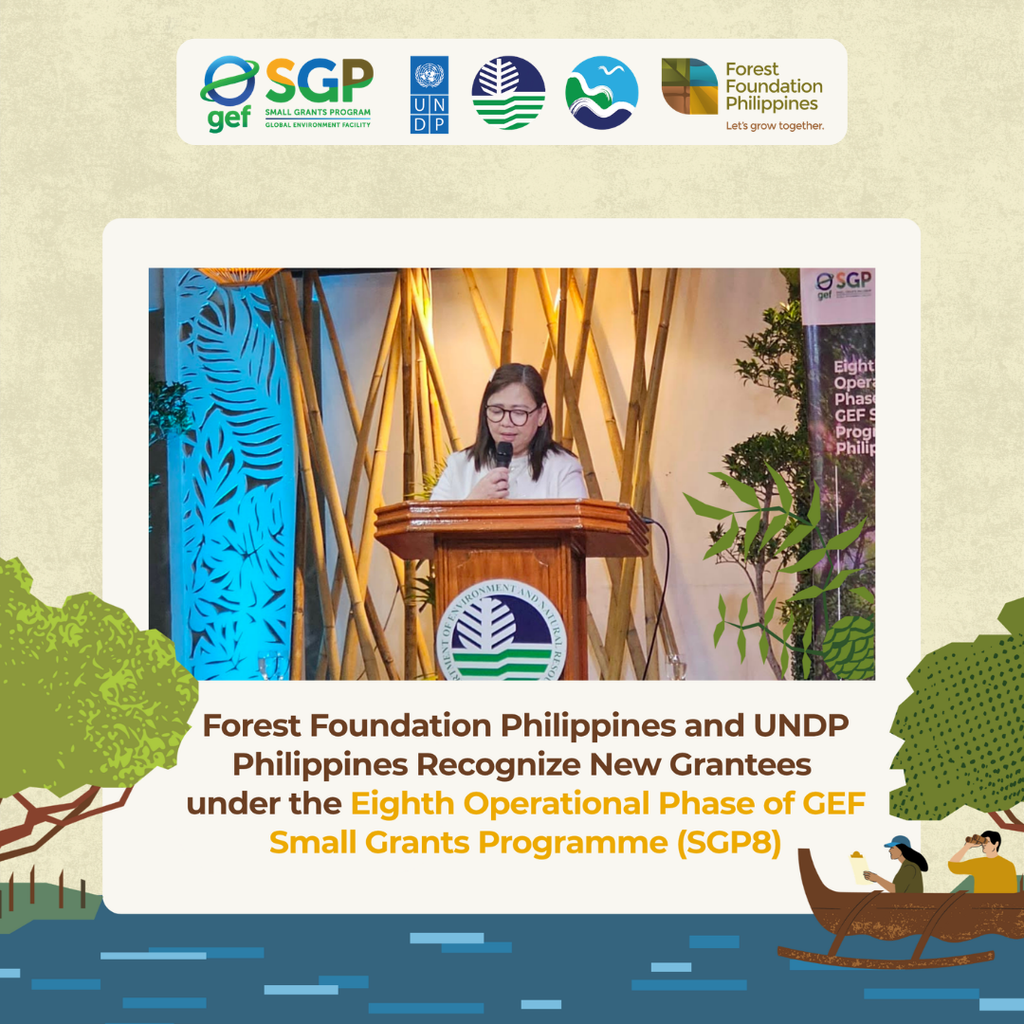
Manila, Philippines – The Eighth Operational Phase of the Global Environment Facility (GEF) Small Grants Program (SGP8), implemented by the Department of Environment and Natural Resources (DENR), through the United Nations Development Programme (UNDP) and Forest Foundation Philippines, have signed new grantees under a Partnership Agreement for the SGP8 Landscape-level Hubs, held on September 7, 2026.
Four Non-Governmental Organizations (NGOs) were approved for the Landscape-Level NGO Hubs grants, namely:
- Tanggol Kalikasan in the Aurora Province;
- NTFP-EP Philippines in the Quezon Province;
- C3 Philippines in the Calamianes Group of Islands; and
- Surigao Economic Development and Microfinance Foundation, Inc. (SEDMFI) in the Surigao del Norte Province
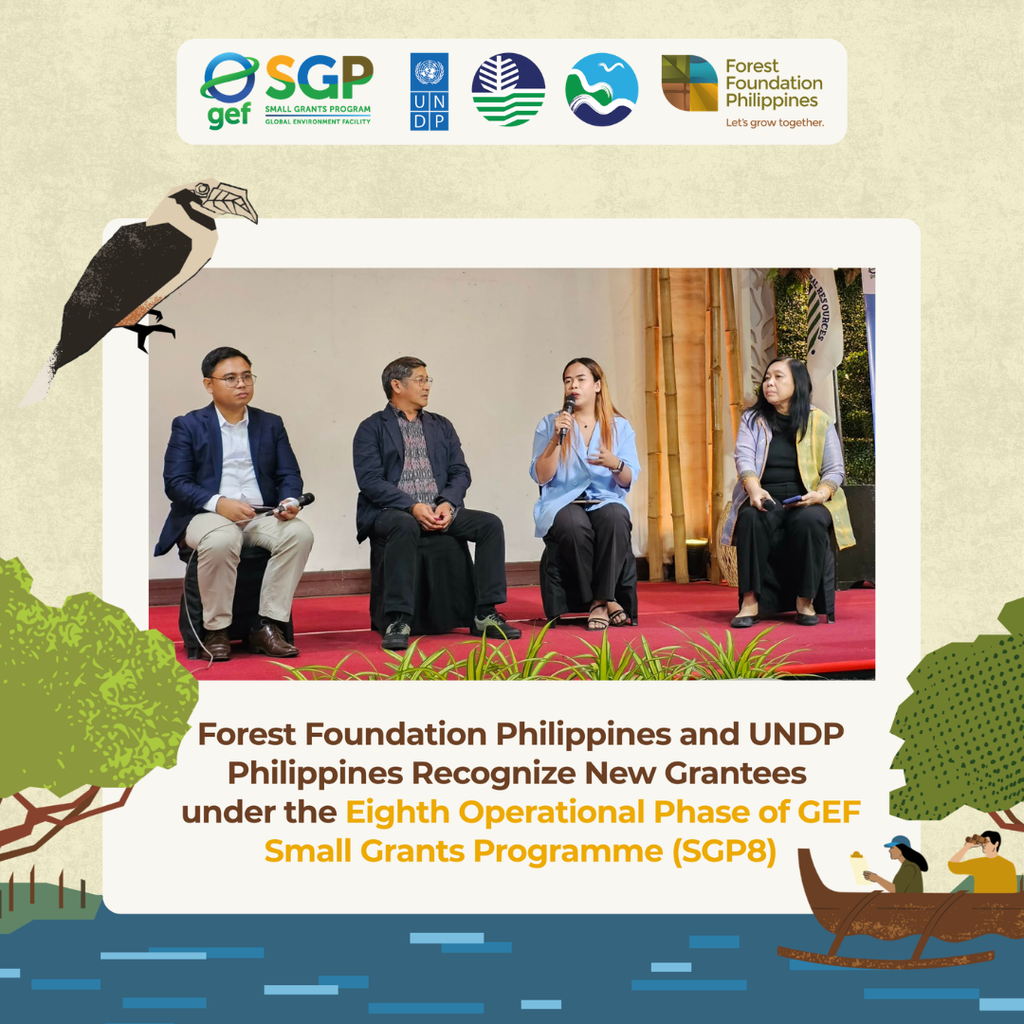
“The Hubs are our partners. They are strategically positioned close to our landscape stakeholders for a reason—and that is to ensure that our partners have someone on the ground whom they could easily rely on in situations that require quick and consistent support. This was one of the primary reasons why they were chosen, because their previous work and current plans are testament to their capacity to guide and lead our potential grantees to their eventual project implementation success,” said Hon. Juan Miguel Cuna, Secretary of the DENR.
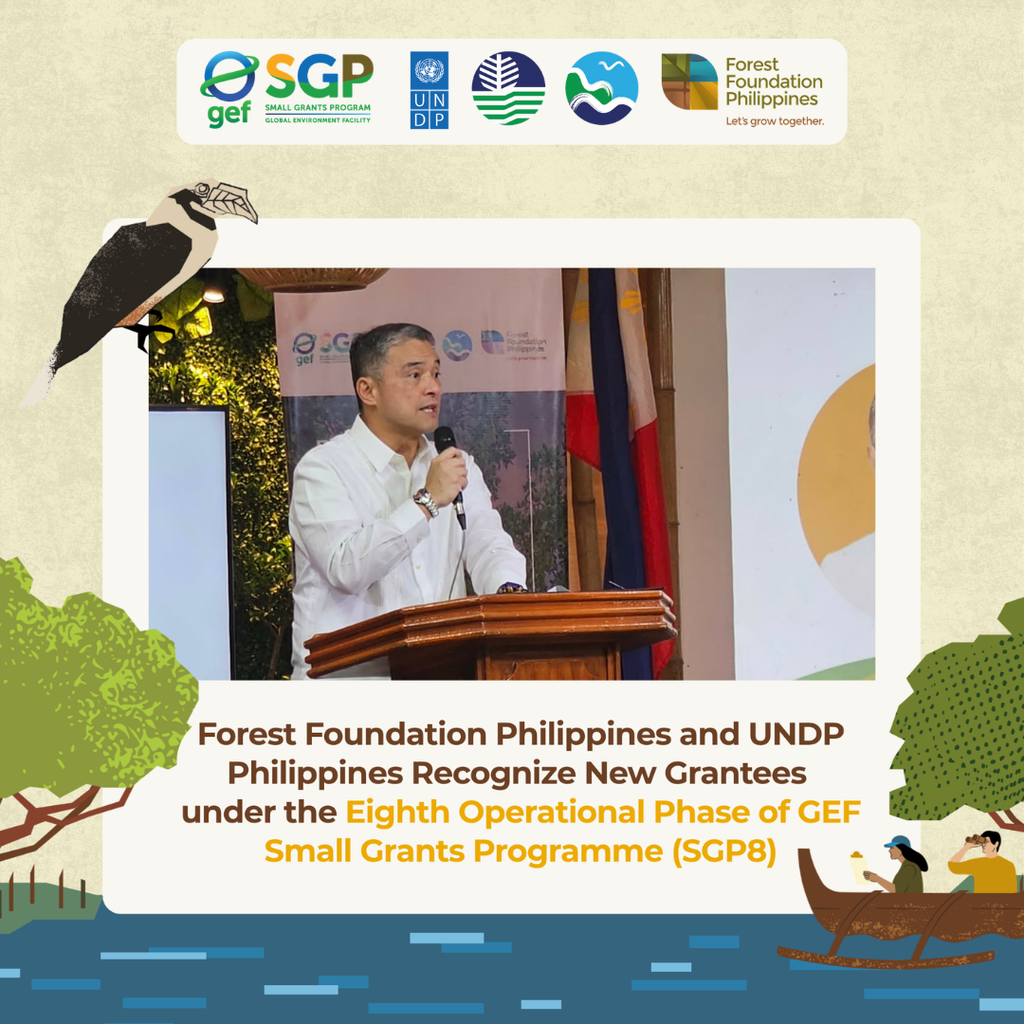
The Program builds upon 30 years of successfully empowering local civil society organizations (CSOs) and community-based organizations (CBOs) to design and lead community-driven initiatives that support natural resource conservation, biodiversity protection, and community well-being. The objectives of SGP8 are to engage local CSOs and CBOs through landscape-seascape approaches by providing access to knowledge, information, and capacity-building through hands-on learning, skills development, and technical and grant assistance.
Atty. Jonas Leones, Undersecretary for Policy, Planning, and International Affairs of the DENR, emphasized the importance of community leadership in achieving lasting conservation outcomes, “SGP8 is about empowering communities to become active partners and stewards of our environment. It recognizes that lasting conservation cannot be achieved by the government alone. It requires the participation, knowledge, commitment, and leadership of communities on the ground.”
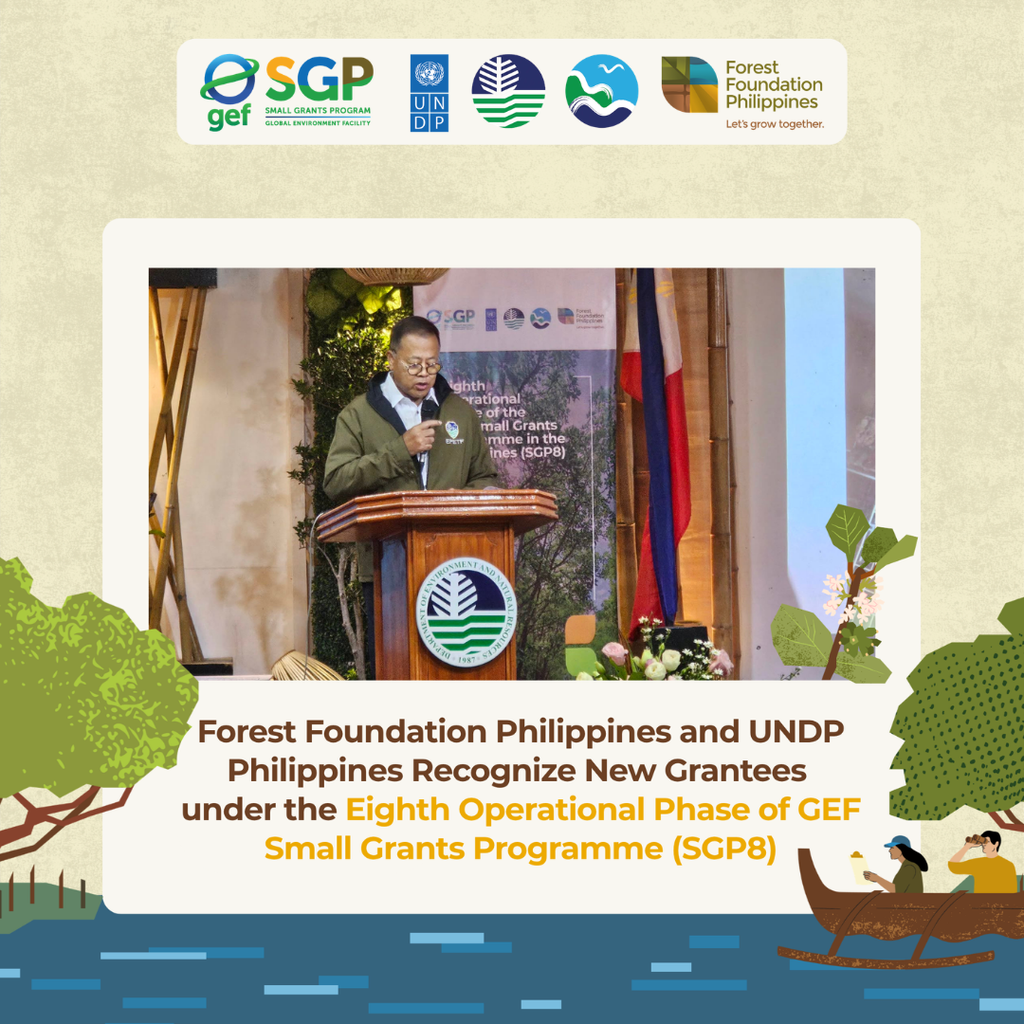
The Partnership Agreements were signed by the Executive Directors of the four landscape-level hub grantees and Atty. Jose Andres Canivel, Executive Director of Forest Foundation Philippines. These agreements were witnessed by Atty. Juan Miguel T. Cuna, the Department of Environment and Natural Resources Secretary and Christophe Bahuet, the United Nations Development Programme Philippines Resident Representative.
“Today’s Partnership Agreement Signing represents more than a formal commitment between organizations. It marks the beginning of a shared responsibility to work together, learn from one another, and build solutions that are responsive to the realities of each landscape. As we move forward with implementation, we look forward to a partnership that produces not only successful projects, but stronger local capacities, meaningful collaboration, and lasting benefits for both communities and the environment,” remarked Atty. Ernesto Adobo, Jr., Undersecretary for Legal, Organizational Transformation, and Human Resources of the DENR.
This Partnership Agreement is the stepping stone for the beginning of a fruitful partnership between the NGOs and partner organizations towards improving communities’ well-being and socio-economic conditions while advancing natural resource conservation and biodiversity protection.
Atty. Analiza Rebuelta-Teh, Undersecretary for Finance, Information Systems, Climate Change, and Administration of the DENR, closed the program by emphasizing the importance of partnership as SGP8 moves into implementation, “I encourage everyone to maintain an open spirit of partnership—to learn from one another, address challenges collectively, and ensure our efforts translate into tangible, lasting benefits for both communities and the environment. The success of SGP8 will ultimately be measured not only by the projects we complete, but by the community and partner capacities we strengthen, the partnerships we forge, maintain, and improve, and the positive change we leave in the communities and landscapes we serve.”
About Forest Foundation Philippines:
Forest Foundation Philippines (doing business as Philippine Tropical Forest Conservation Foundation, Inc.) is a non-stock, non-profit, non-governmental organization that serves as a conservation financing platform to facilitate the flow of conservation funds from international and other donors to communities in the Philippines.
Established in 2002, the Foundation has been managing the Tropical Forest Conservation Fund, created through a debt-for-nature swap between the Governments of the Philippines and the United States. The Foundation works with government agencies and development partners in implementing grant programs such as the Mount Mantalingahan Protected Landscape (MMPL) Endowment Fund, the Philippines-Canada Partnership on Nature-based Solutions for Climate Adaptation (PCP4NbS), the Eighth Operational Phase of the Global Environment Facility (GEF) Small Grants Programme (SGP8), and the Integrated Approach in Management of Major Biodiversity Corridors in the Philippines (Biodiversity Corridor Project).
To strengthen collaboration in ecosystem restoration efforts, the Foundation also leverages financial resources and in-kind contributions through public-private-community partnerships.
About SGP8:
The Small Grants Program (SGP) is a corporate programme of the Global Environment Facility (GEF) implemented by the United Nations Development Programme (UNDP). Since 1992, SGP has provided financial and technical support to over 30,000 locally-led initiatives that conserve and restore the environment while improving livelihoods and well-being. By partnering with civil society and community-based organizations, with special consideration for Indigenous Peoples, women, youth, and persons with disabilities, SGP demonstrates that local action can deliver global environmental benefits. Guided by the principles of innovation, inclusion, and impact, SGP supports solutions that promote integrated landscape and seascape approaches to address challenges related to biodiversity loss, climate change, land degradation, chemicals and waste, and international waters, while contributing to resilient communities and sustainable development.